

UX / UI Case Study
Online Mediation Case Management Platform
Designing a Scalable SaaS Platform to Resolve Disputes Faster, Smarter & Humanely
Senior Product Designer
Legal Tech / B2B SaaS
Enterprise UX
45 days
Resolution Time
from 72 days
78%
Attendance Rate
from 54%
55%
Settlement Success
from 32%
82
CSAT Score
from 58
Project Background
Overview
Mediation is one of the fastest-growing alternatives to litigation and arbitration, helping parties resolve disputes collaboratively through a neutral mediator. However, most mediation processes in India and global enterprise ecosystems still rely on manual, fragmented workflows.
Current challenges include :
Email-based communication
Manual scheduling
Poor visibility into case progress
Delayed settlements
Excel case tracking
Offline documentation
No centralized communication records
Low user trust due to lack of transparency
Lack of integration with other legal tools
Problem Statement
How might we design a secure, scalable, digital-first mediation platform that helps enterprises and individuals resolve disputes within 45 days, while improving transparency, trust, efficiency, and adoption?
Research & Discovery
Research Methodology
Research Conducted
12
Stakeholder Interviews
38
User Interviews
112
Surveys
8 Products
Competitive Analysis
6 Ops Teams
Workflow Shadowing
3
Internal Leadership
Total Participants :
46
Progress Visibility

Progress tracking reduces anxiety and improves trust

Trust Wins Over Speed
Speed alone doesn't win — trust wins through transparency

Dashboards for Buyers
Enterprise buyers need comprehensive analytics

Emotional Reassurance

Language Matters
Legal language kills adoption, clarity drives engagement

Automation Reduces Friction
Users prefer automated workflows and reminders.
Key Research Insights
User Persona
Understanding Our User

Enterprise Ops Head
Goals
Resolve disputes faster
View portfolio status
Reduce escalations
Pain Points
No centralized reports
Manual tracking
Vendor dependency

Mediator
Goals
Prepare quickly
Manage multiple cases
Fair neutral workflow
Pain Points
Missing documents
Scheduling chaos
No summaries

Claimant / Respondent
Goals
Understand process
Quick fair outcome
Low stress experience
Pain Points
Legal jargon
Missed notices
Fear of bias
Users need emotional support during dispute resolution
KPI & Success Metrics
Measuring Success
KPI
Avg Resolution Time
Hearing Attendance Rate
Settlement Success Rate
Ops Manual Effort
CSAT
Case Visibility Satisfaction
72 Days
54%
32%
High
58
41%
45 Days
78%
55%
-60%
82
85%
Faster closure
Better participation
Better outcomes
Automation
Better trust
Transparency
Baseline
Target
Outcome
Design Process
Discovery
Stakeholder interviews and market analysis


Research
User testing and data analysis
IA + Flows
Information architecture and user flows

Wireframes
Low to mid-fidelity prototypes

Visual UI
High-fidelity design system

Testing + Iteration
Usability testing and refinement

12 Month Design Sprint
Design Solutions

Guided Case Registration
Problem: Process confusion led to high dropout rates
Solution: Step-by-step guided flow with plain language and progress indicators
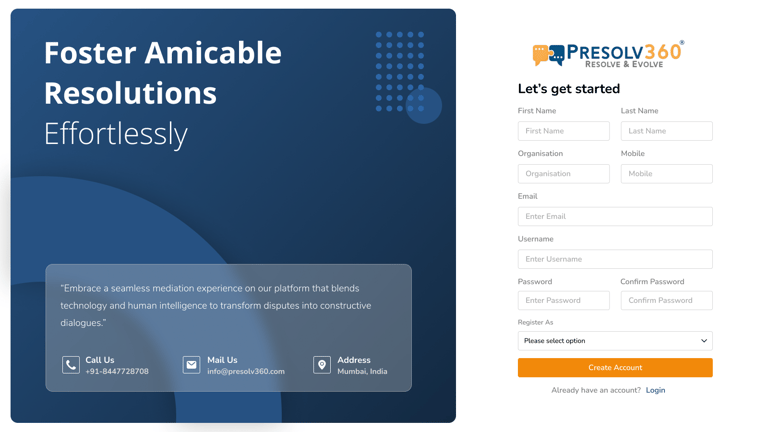
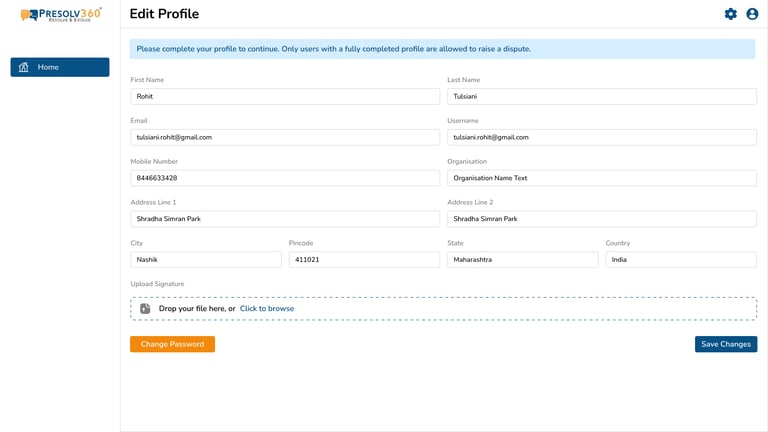
63% reduction in time to register
91% task success rate
Simplified onboarding

Smart Scheduling System
Problem: Scheduling delays caused missed hearings and poor attendance
Solution: Intelligent calendar with availability matching and automated reminders
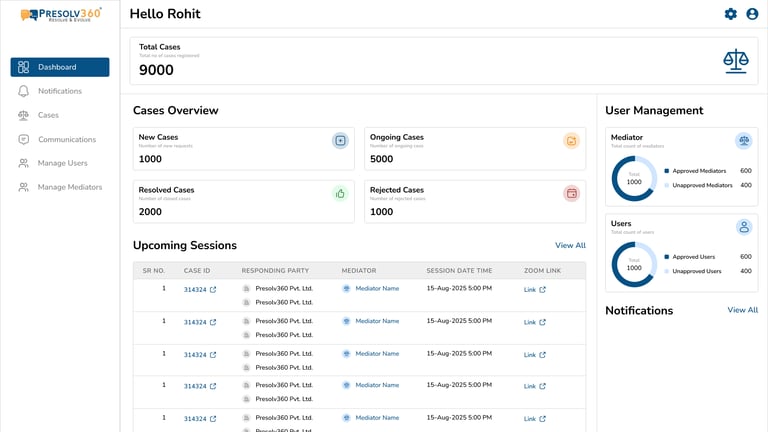
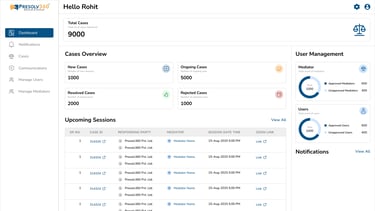
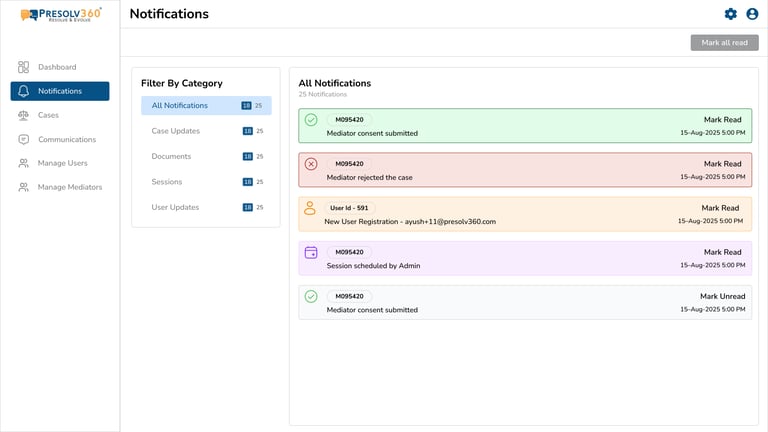
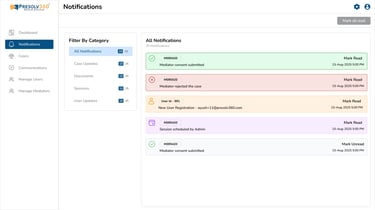
78% attendance rate (from 54%)
Reduced scheduling time

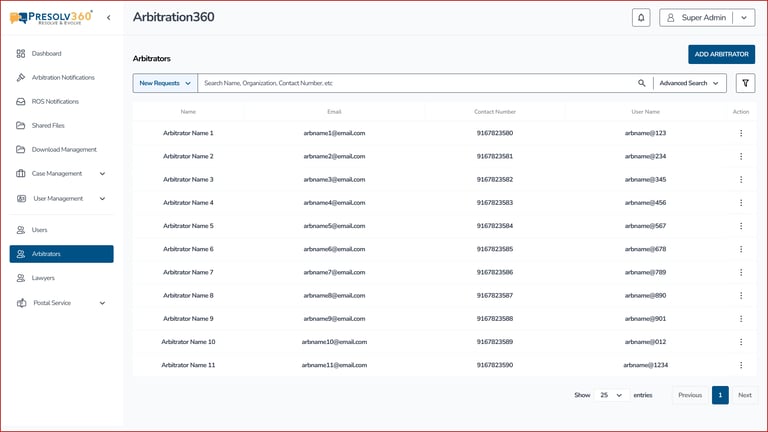
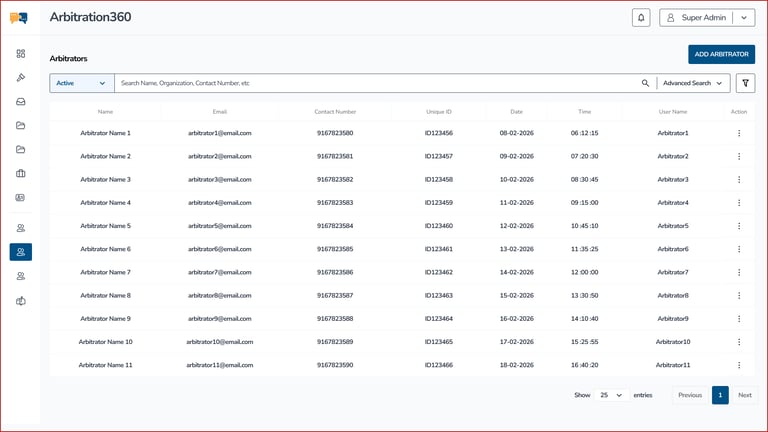
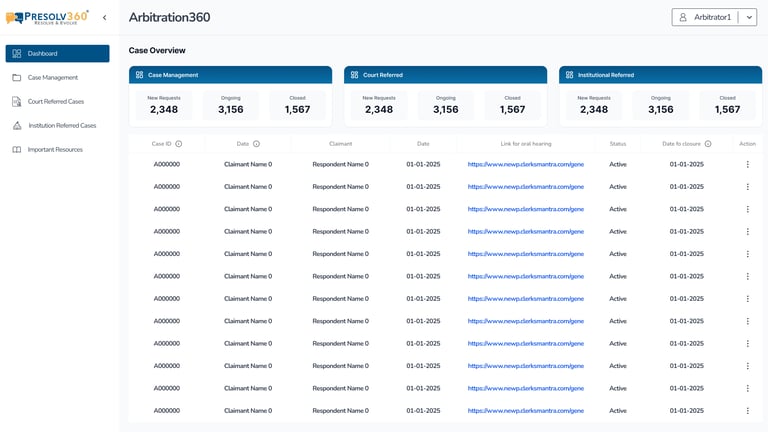
Arbitrator Workspace
Problem: Manual arbitrator selection → bias concerns
Solution: Algorithm-driven assignment and dedicated workspace
Increased trust
Reduced disputes on arbitrator selection

Analytics & Insights Dashboard
Problem: No visibility into performance
Solution: Algorithm-driven assignment and dedicated workspace
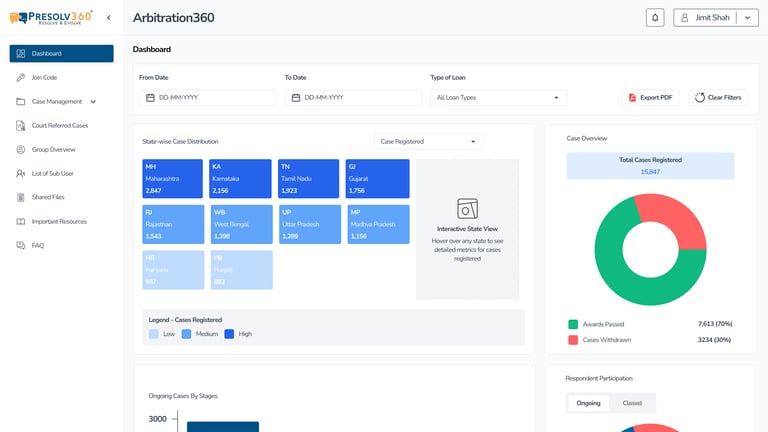
Data-driven decisions
Improved efficiency

User & Party Management
Comprehensive party details and contact management for all stakeholders
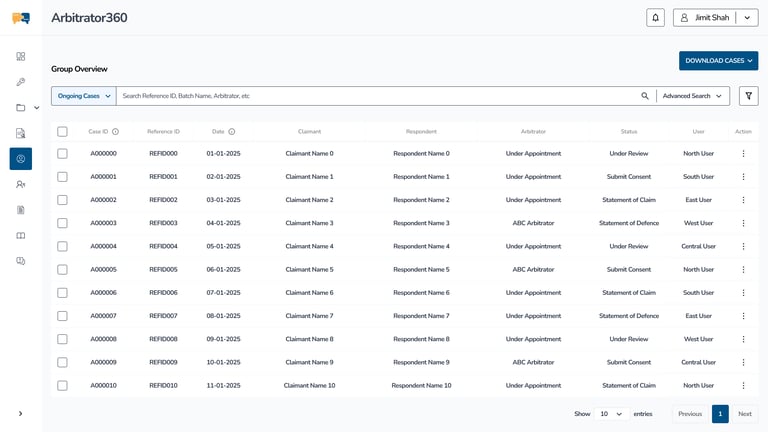
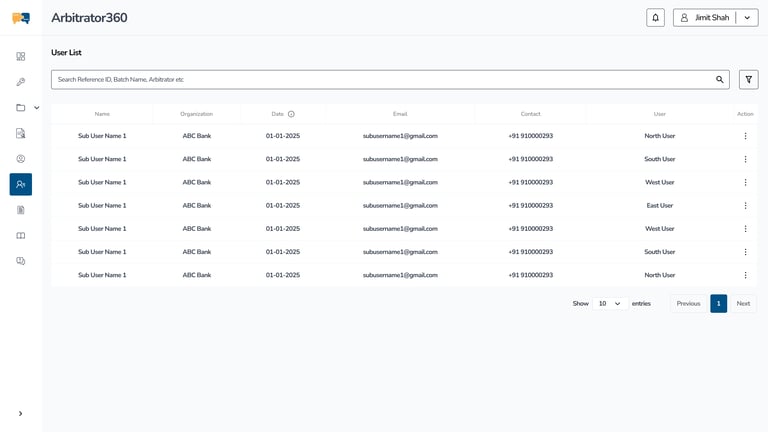
Fewer no-shows
Usability Testing
Testing Participants
6
Ops Teams
7
Arbitrators
5
Respondents
3
Internal Leadership
Total :
18 user tested
Testing & Validation
92%
Task Success Rate
48%
Drop Time on Task
61%
Drop Error Rate
84
SUS Score
Core Learnings
Product Learnings
Legal tech wins through trust + speed
UX can become competitive moat
Transparency reduces escalations
Design Learnings
Simplicity beats feature overload
Dashboards must be actionable
Tables need power-user ergonomics
Business Learnings
Faster closures = stronger retention
Better participation = higher resolution success
Analytics = upsell opportunity
Final Impact Summary
The redesigned arbitration platform transformed a fragmented legal workflow into a modern enterprise dispute resolution ecosystem
Faster
Transparent
Scalable
User-friendly
Enterprise-ready
This is where the short version ends.
The thinking, trade-offs, and iterations continue beyond this page.
happy to discuss them one-on-one on call

Lets build
something great
together
I'm always open to conversations around design and building meaningful work. Feel free to reach out through any of the channels.
Quick Links
Home
Explorations
About
Contact Me
